
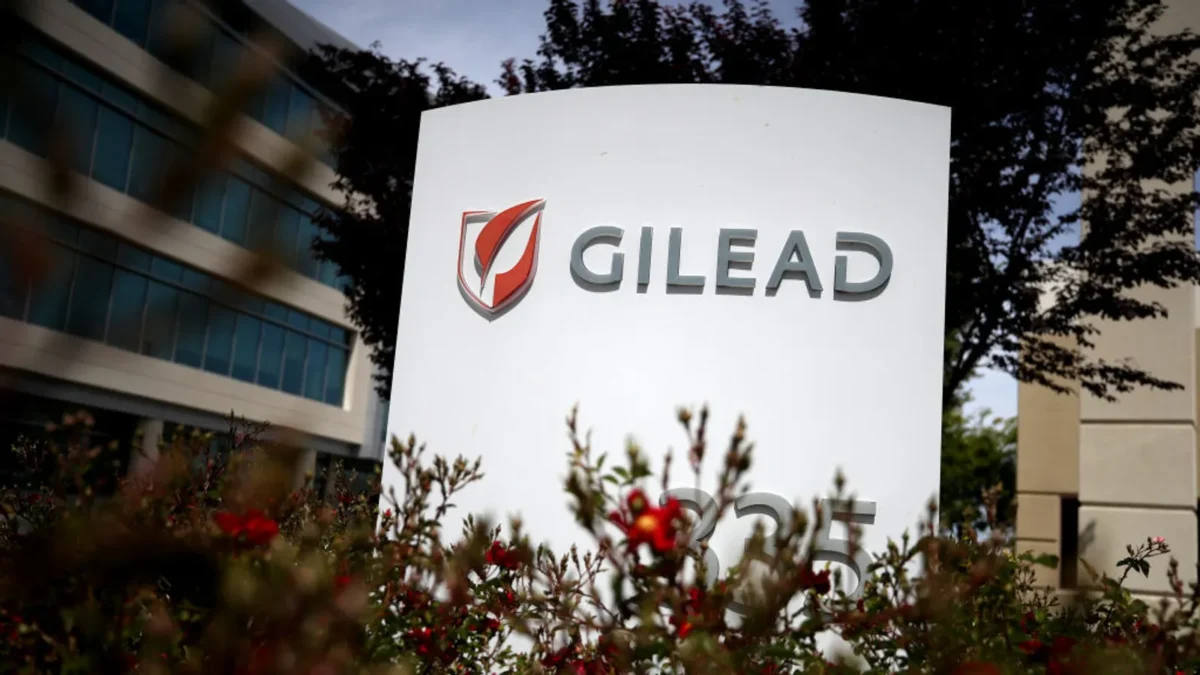
Gilead Tubulis acquisition marks a strategic move to enhance its ADC technology portfolio, valued at $3.1 billion.
• Gilead acquires Tubulis for $3.1 billion.
• Acquisition includes ADC technology and clinical prospects.
• Enhances Gilead’s oncology pipeline and market position.
Strategic Shift
Gilead Sciences has announced its acquisition of Tubulis, a specialist in antibody-drug conjugate (ADC) technology, for $3.1 billion. This marks Gilead’s third acquisition since late February 2025, highlighting its strategic focus on expanding its oncology portfolio. The deal provides Gilead with access to Tubulis’ innovative ADC technology, which is designed to reduce toxicity and improve efficacy in cancer treatments. The acquisition also includes multiple clinical-stage prospects, enhancing Gilead’s pipeline.
The acquisition aligns with Gilead’s ongoing efforts to strengthen its position in the oncology market. By integrating Tubulis’ ADC technology, Gilead aims to develop more effective cancer therapies with fewer side effects. This move is expected to bolster Gilead’s competitive edge in the rapidly evolving oncology landscape.
Market Context
The ADC market has been gaining traction due to its potential to deliver targeted cancer therapies with improved safety profiles. According to industry reports, the global ADC market is projected to reach $10 billion by 2028, growing at a compound annual growth rate (CAGR) of 12%. Gilead’s acquisition of Tubulis positions it well to capitalize on this growth trend.
Tubulis, based in Germany, has developed a proprietary platform that enhances the stability and efficacy of ADCs. This technology is expected to complement Gilead’s existing oncology assets and accelerate the development of new treatments. The acquisition also reflects Gilead’s commitment to investing in innovative technologies that address unmet medical needs.
Pipeline Expansion
With the addition of Tubulis’ assets, Gilead gains access to several promising candidates in clinical development. These include therapies targeting various cancer types, such as solid tumors and hematological malignancies. The integration of these assets is anticipated to enhance Gilead’s research and development capabilities, enabling the company to bring new treatments to market more efficiently.
Moreover, the acquisition is expected to generate significant synergies by combining Gilead’s expertise in drug development with Tubulis’ cutting-edge technology. This collaboration could lead to the discovery of novel ADCs with improved therapeutic profiles, ultimately benefiting patients with limited treatment options.
Financial Considerations
The $3.1 billion deal underscores Gilead’s financial commitment to expanding its oncology portfolio. The transaction is expected to be funded through a combination of cash reserves and debt financing. Analysts predict that the acquisition will be accretive to Gilead’s earnings within the next two years, driven by potential revenue growth from new product launches.
Gilead’s recent acquisitions reflect its strategic focus on diversifying its product offerings and enhancing its competitive position in the biopharmaceutical industry. As the company continues to invest in innovative technologies, it aims to deliver sustainable growth and value for shareholders.
For more updates on M&A and Licensing, visit our M&A and Licensing section.